How to Replace Your Oil Furnace (Beginner’s Guide for Homeowners)
Replacing an oil furnace is a major home upgrade—but it doesn’t have to be confusing. If you’re a new homeowner, the key is understanding what system you have, what your options are, and how the process works.
This guide breaks it down in simple terms.
First: What Type of Heating System Do You Have?
Before replacing anything, you need to know how your home is heated. Most oil systems fall into one of two categories:
🔥 1. Forced Hot Air (Furnace)
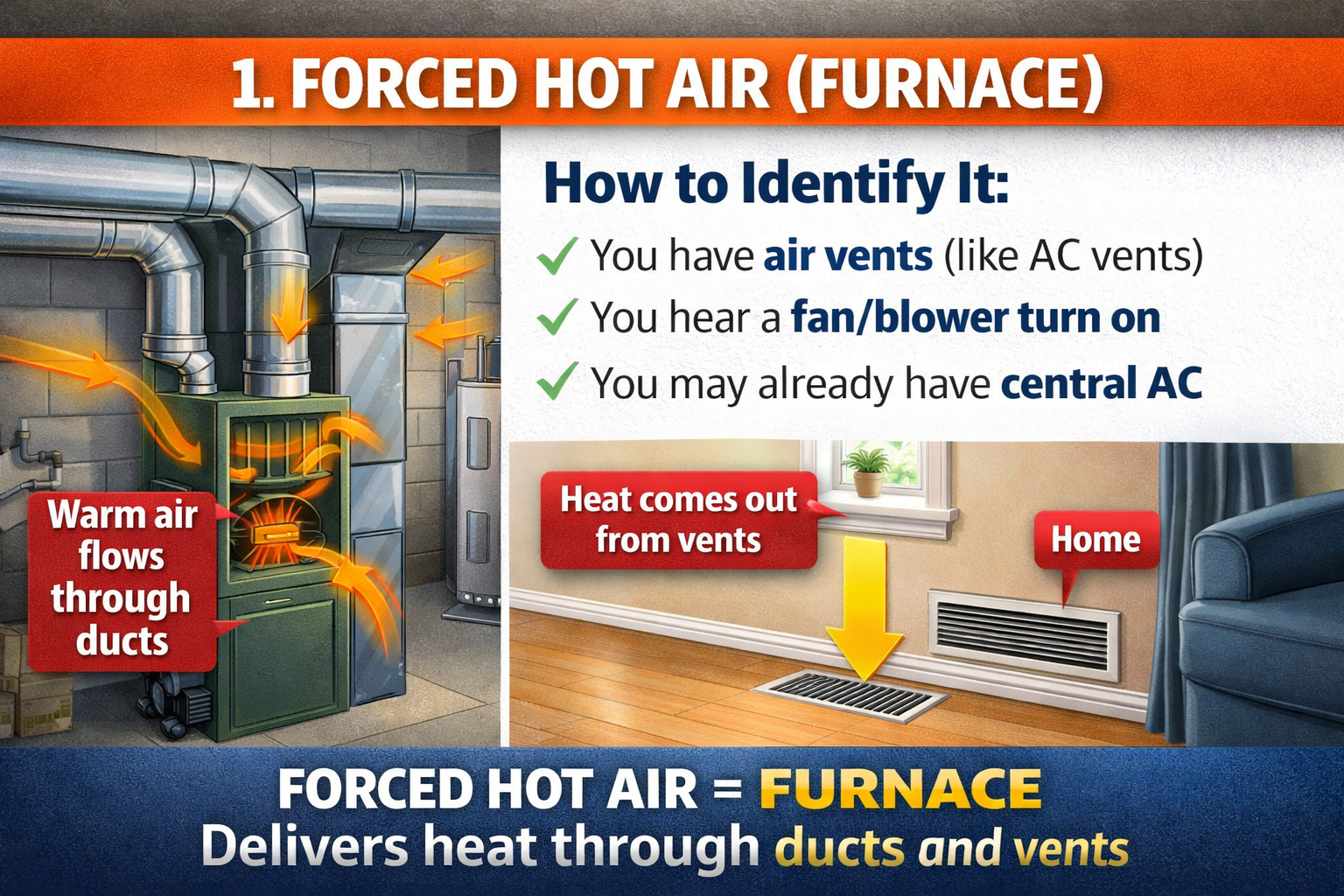
How It Works:
- The furnace heats air
- A blower pushes warm air through ducts
- Heat comes out of vents in floors or walls
How to Identify It:
- You have air vents (like AC vents)
- You hear a fan/blower turn on
- You may already have central air conditioning
Pros:
- Heats quickly
- Can combine with central AC
- Lower installation cost
Cons:
- Air can feel dry
- Can be noisier
- Heat distribution may be uneven
🔥 2. Hot Water / Hydronic (Boiler)
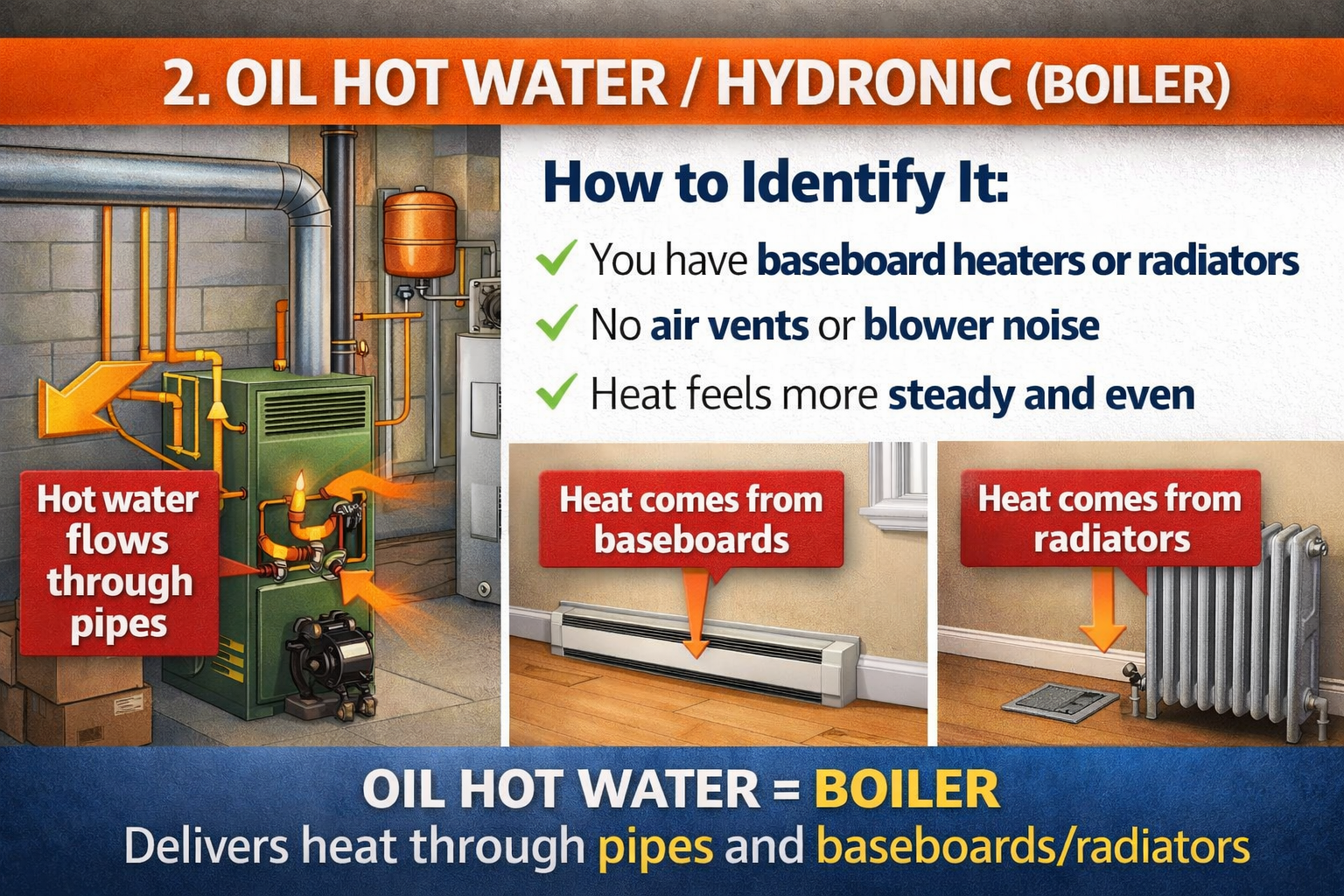
How It Works:
- The boiler heats water
- Hot water flows through pipes
- Heat comes from baseboards or radiators
How to Identify It:
- You have baseboard heaters or radiators
- No air vents or blower noise
- Heat feels more steady and even
Pros:
- Comfortable, even heat
- Quiet operation
- Less dust/allergens
Cons:
- Slower to heat up
- No built-in AC option
- Higher installation cost
Should You Replace with the Same Type?
In most cases: YES
Switching systems (air ↔ water) is expensive because it requires:
- New ductwork or piping
- Major home modifications
👉 Typical recommendation: Replace your system with the same type you already have.
When Should You Replace Your Oil Furnace?
You should seriously consider replacement if:
- Your system is 20–30 years old
- Repairs are becoming frequent
- Your energy bills are rising
- The system struggles to heat your home
- You hear loud or unusual noises
👉 Rule: If a repair costs more than $2,000–$3,000, replacement is often the better long-term choice.
What Are Your Replacement Options?
1. New Oil Furnace (Like-for-Like Replacement)
- Easiest and most common option
- Modern units are far more efficient
2. Upgrade to High-Efficiency Oil System
- Better fuel usage
- Lower long-term heating costs
3. Convert to Another Fuel (Optional)
- Natural gas (if available)
- Propane
- Electric heat pump systems
👉 Important: Conversions can cost significantly more upfront.
What Does It Cost?
Typical ranges (varies by home size and region):
- Oil Furnace (Forced Air): $5,000 – $9,000
- Oil Boiler (Hot Water): $6,000 – $12,000
- Fuel Conversion: $10,000 – $25,000+
What Happens During Replacement?
Step-by-Step:
- Evaluation
- Contractor assesses your current system
- Measures home size and heating needs
- System Selection
- Choose efficiency level and model
- Removal
- Old furnace/boiler is removed
- Installation
- New system installed and connected
- Testing
- System is tested for safety and performance
- Final Walkthrough
- You’re shown how to operate and maintain it
How Long Does It Take?
- Most replacements: 1–2 days
- More complex jobs: 2–4 days
How to Choose the Right Contractor
Look for:
- Licensed and insured
- Strong local reviews
- Clear, written estimates
- Experience with oil systems
👉 Always get 2–3 quotes before deciding.
Tips to Save Money
- Replace in the off-season (spring/summer)
- Ask about rebates or tax credits
- Consider 0% financing or payment plans
- Upgrade insulation at the same time
Final Thoughts
Replacing your oil furnace is one of the most important upgrades you’ll make as a homeowner.
Simple rule:
- Know your system (air vs water)
- Replace before it fails
- Choose efficiency and reliability over the cheapest option
A properly installed system will keep your home warm—and your costs predictable—for the next 20+ years.